



 ADVICE COLUMN · 2026
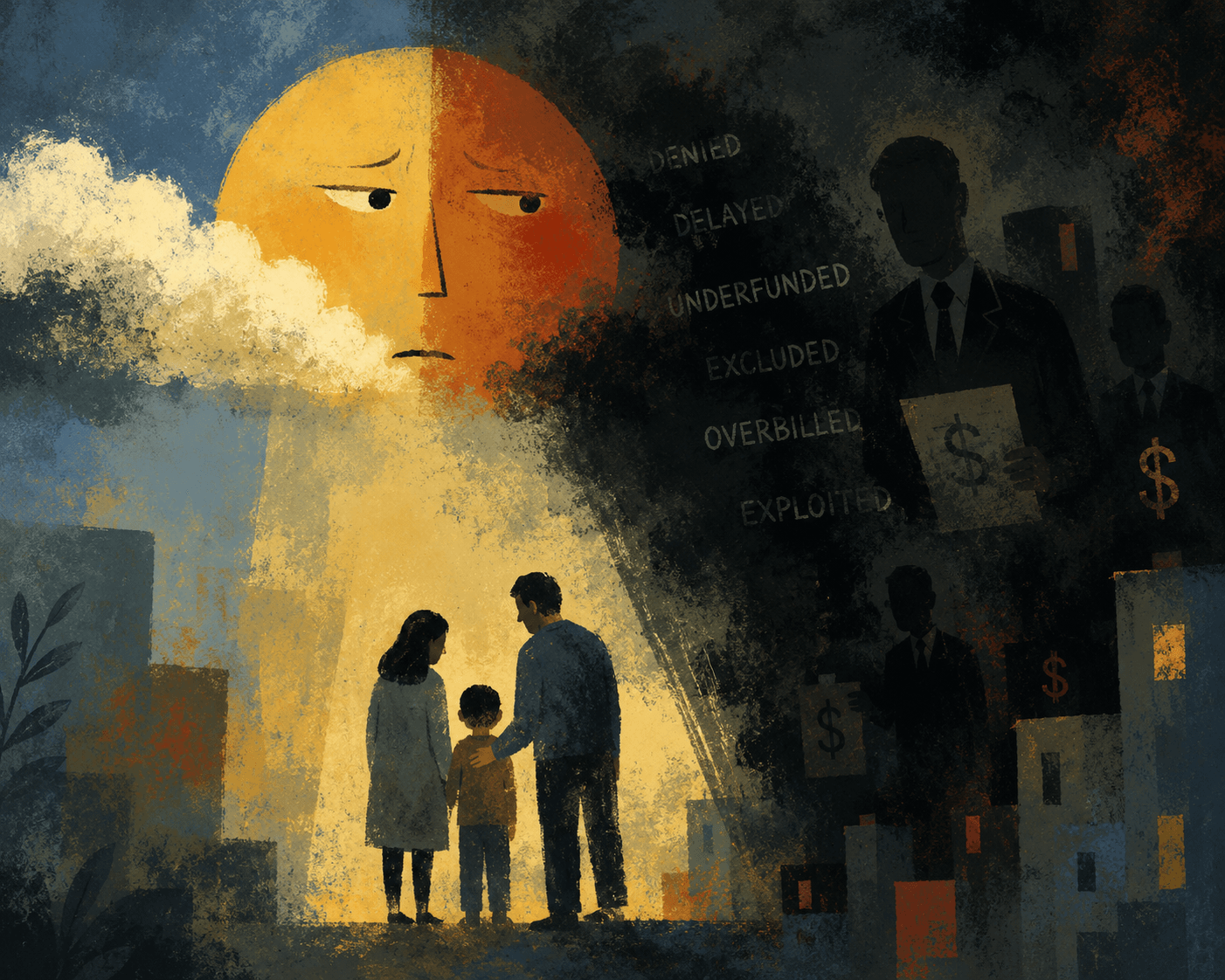
When you've lost trust in the systems that are supposed to help—how do parents keep moving forward?
 Column by Aria
MAY 2026
A letter from a family
Dear Aria:
I honestly feel like a lot of the systems that are supposed to “help” children with disabilities and their families – healthcare, special education, therapies, insurance, government programs, social services – often do not actually protect, support or truly care about vulnerable children in the way people claim they do. Sometimes it feels like families are left fighting constantly for basic support, while watching funding get cut, services become harder to access, schools lower expectations, and children get pushed through systems that seem more focused on management, compliance, money or survival than genuinely helping them build meaningful lives. After years of difficult experiences, disappointment, and watching how these systems actually function in real life, it has become hard for me to trust any of it anymore or even feel hopeful about my child’s future. How do parents continue moving forward when they feel this discouraged, disillusioned, and emotionally exhausted by the world around them?Aria responds
Many of the feelings you are describing do not come out of nowhere. A lot of families raising children with disabilities, developmental differences, emotional challenges, or complex support needs have experienced years of fighting systems that often feel underfunded, overwhelmed, dismissive, impersonal, profit-driven, poorly trained, inaccessible, or emotionally exhausting to navigate. Some families have encountered schools or intensive therapies that lowered expectations for their child instead of teaching them, providers who did not listen, therapies that felt rigid or emotionally harmful, insurance barriers, endless waitlists, burned-out systems, or professionals whose skill levels varied dramatically. After enough painful experiences, it can become very difficult not to feel disillusioned, angry, emotionally exhausted, or distrustful.
At the same time, life can become even harder when children and families who genuinely need support stop receiving any meaningful developmental, emotional, educational, behavioral, communication, or healthcare support at all. Not all places are the same. Not all professionals have the same level of training, developmental understanding, emotional insight, ethics, flexibility or long-term vision for children. Some families have unfortunately experienced environments that felt emotionally harmful, low quality, overly rigid, poorly individualized, or not aligned with their child’s developmental needs. At the same time, there are also highly skilled, deeply thoughtful, compassionate professionals and programs that do exist — even if they can sometimes feel difficult, rare, exhausting, or discouraging to find.
One difficult reality is that families sometimes understandably stop searching after repeated bad experiences and begin assuming that all services, therapies, schools, providers or systems will ultimately feel the same. In medicine, people often understand that if a primary care physician is dismissing serious symptoms, they may need to seek a second, third or fourth opinion because continuing with the wrong care can sometimes allow a person to become more unwell over time. Similarly, if a particular cancer treatment is not working, causing harm, or failing to improve the condition, most people would not assume that all cancer treatment everywhere is therefore useless. They would often continue searching for different specialists, hospitals, treatment approaches, clinical opinions, or providers with stronger expertise because the stakes are too important to simply stop trying altogether. The same can happen in physical rehabilitation, chronic pain treatment, neurology, speech therapy, or other medical areas where the quality, expertise, approach, and philosophy of the provider can significantly affect outcomes.
Developmental, emotional, behavioral, educational and psychological support can sometimes work similarly. The quality of the environment, relationship, teaching approach, emotional safety, developmental understanding, long-term expectations, and skill of the professional matters enormously.
At the same time, there is also an important psychological difference between receiving poor primary care or poor physical medical treatment versus receiving poor behavioral, emotional, developmental or psychological care. In many physical healthcare situations, disappointing care may still leave the person emotionally intact enough to continue searching for better answers. However, because of the very nature of it – behavioral and psychological services directly involve and deal with emotions, relationships, identity, stress, motivation, hope, and everyday functioning – so, poor-quality experiences in these areas can sometimes leave a much deeper emotional impact on both parents and children. Families may leave feeling discouraged, emotionally exhausted, hopeless, ashamed, invalidated, defeated, distrustful, or psychologically overwhelmed in ways that gradually reduce their motivation to continue seeking help or trying again. Over time, this emotional exhaustion itself can begin reinforcing sadness, helplessness, withdrawal, hopelessness, and the belief that meaningful support no longer exists — even when better opportunities, environments, or professionals may still be possible to find.
And if you feel genuinely feel afraid, concerned, emotionally exhausted, pressured, manipulated, distrustful, or if your child is clearly becoming increasingly unhappy, emotionally shutting down, distressed, fearful, losing joy, regressing in communication or social engagement, not looking forward to sessions, or consistently shows stagnating progress or appearing worse rather than better over time – you absolutely do not have to continue with environments that feel harmful or deeply wrong to you AND you do not ever have to continue with those services simply because someone told you to “keep going” or because you already signed paperwork or committed to a treatment schedule.
Unfortunately, some families enter programs where they are encouraged to commit immediately to very intensive schedules — sometimes 20–40 hours per week for many months — and may begin feeling emotionally trapped into continuing, even when they are seeing concerning signs in their child or little meaningful improvement in communication, emotional connection, learning, social engagement, independence, or overall quality of life. Some parents continue because they become terrified that if they stop, their child may “never” attend regular school, learn important skills, become independent, or succeed later in life. Others continue holding onto the hope that if they can “just get through” six months or a year of treatment, their child will somehow suddenly become “ready” for school or no longer need any developmental, behavioral, emotional, or educational support afterward.
In reality, child development does not usually work like a fixed program where children simply “complete” a certain number of therapy hours and are then permanently done needing support. Development is ongoing, individualized, relational, emotional, and deeply connected to the child’s environment, learning experiences, emotional safety, communication, opportunities, relationships, developmental readiness, and quality of life as well as the quality of support received itself. If a child is consistently showing signs of distress, emotional shutdown, worsening behavior, loss of joy, reduced connection, or lack of meaningful engagement over time — families should not feel obligated to continue simply out of fear, pressure, guilt, or the belief that suffering through the situation longer will magically produce a different outcome later. Families should never feel trapped into remaining in services that consistently feel emotionally unsafe, degrading, hopeless, disconnected from the child’s needs, or fundamentally misaligned with what they believe is helping their child grow.
At the same time, one of the biggest psychological dangers after repeated disappointment is something psychology refers to as learned helplessness. This occurs when repeated failures, rejection, discouragement, lack of progress, invalidation, or painful experiences gradually train the brain to believe that effort itself no longer matters. Over time, the mind slowly stops asking: “What if something different could actually help?”
And instead begins assuming:
“Why even try anymore? It is going to be the same”
The difficult part is that this shift often does not feel emotional – it feels logical. It can feel like self-protection, realism, emotional survival, or avoiding further disappointment. But sometimes the brain quietly begins building an invisible wall based on past experiences that may no longer fully reflect what is possible now.
And what that invisible wall is actually doing is quietly closing the door before a person even fully reaches it. This pattern shows up everywhere in real life. People stop applying for opportunities after repeated rejection. They stop building after early failures. They stop speaking up after being overlooked. They stop pushing forward after progress slows down. Not necessarily because they are incapable of succeeding — but because the brain has gradually been conditioned to expect failure, disappointment, invalidation, or emotional pain instead.
One of the most important things people often miss is that sometimes the conditions themselves may have changed. The opportunity may genuinely exist now. There may be a new provider who approaches children in a completely different way than the environments the family previously experienced. The environment may be different. Maybe new interventions, developmental approaches, educational opportunities, technologies, community supports, or emotionally healthier therapeutic models exist now that were not available, accessible, or widely understood years earlier. The right support, relationship, mentor, school, provider, or opportunity may actually be much closer than before — but the internal belief system shaped by past experiences has not yet emotionally caught up to that new possibility. So the person remains standing still in a moment that may actually require movement, hope, openness, risk, or trying again in a different direction.
There is a well-known psychological experiment sometimes called the “Invisible Wall” experiment. A predator repeatedly attempts to reach prey but is blocked each time by a clear glass barrier. Eventually, the predator stops trying altogether because its brain has learned:
“Effort changes nothing”.
But when the barrier is finally removed, the predator still does not move toward the opportunity directly in front of it – because the invisible wall now exists psychologically rather than physically.
Human beings can fall into the exact same pattern. After enough failed experiences, many people stop seeking support, stop searching for good environments or providers, stop advocating, stop trusting, stop hoping, or stop trying new possibilities – not because opportunities no longer exist, but because the brain has learned to expect disappointment before even reaching them.
The good news is that learned helplessness is learned – which means it can also gradually be unlearned. Confidence and hope do not usually return all at once. They often begin rebuilding through experiences that slowly show the brain that effort can still lead to something different than before. Sometimes it starts when a family finally encounters a provider who genuinely listens, understands the family’s and child’s hopes, dreams and long-term goals for the future, keeps meaningful expectations high for what the child may still be capable of achieving over time, while also recognizing the current challenges and barriers for the child to achieve those dreams and goals. Sometimes it begins when the child is suddenly happier, more emotionally connected, more socially engaged, more communicative, more motivated to participate, or actually begins looking forward to learning, relationships, or environments again.
Very often, the shift doesn’t happen through thinking alone. It happens through action. The shift begins through small attempts, small wins and small pieces of proof that progress, growth, learning, and meaningful change are still possible. Over time, the brain slowly begins relearning that not every environment or attempt will repeat the past.
Confidence and hope rebuild gradually
— Through evidence
— Through repetition
— Through choosing to try again
Even when the mind is telling you not to.
The biggest barrier for families with painful past experiences with various support systems is not always the obstacle in front of them. But the belief that they have built from the past – that may no longer reflect what’s possible now. And once they challenge that belief, everything begins to shift. Sometimes the most important thing is simply refusing to completely stop searching for places, people, opportunities, relationships, interests, communities, mentors, programs, schools, or environments where your child is genuinely learning, growing, connecting, feeling emotionally safe, discovering strengths, developing confidence and participating meaningfully in life. The world is imperfect, unequal, and often very hard – but children can still continue growing in extraordinary ways when they encounter environments that truly see them, support them, challenge them appropriately and believe in their long-term potential. The right opportunity might already be there.
The question is…
Are you still willing to reach for it?
Ty's, yours. Take care.
- Aria
This column offers general, educational guidance. It is not individualized medical, psychological, diagnostic, educational, or legal advice.
Have your own question? Submit a letter to Ask Aria.